How ASEAN Nationals Can Apply for a Djibouti eVisa Online
You want to travel from Southeast Asia to the Horn of Africa? Djibouti is emerging as a destination for first-tier adventurers from ASEAN countries. Whether you plan to explore the stunning salt lakes or attend strategic business engagements, understanding the entry process is essential. This guide offers a comprehensive breakdown of the Djibouti eVisa for ASEAN Countries , explaining how citizens from ASEAN nations can prepare for a smooth journey.

The Djibouti eVisa is an efficient entry solution for ASEAN travelers, featuring a 100% online application system that eliminates the need for time-consuming embassy visits and simplifies travel planning.
How does a tourist visa work?
A tourist eVisa (Electronic Visa) is an official electronic document, which permits foreigners to arrive and travel around Djibouti to sightsee. The eVisa is electronically bound to your passport as opposed to the traditional visas whereby you have to be physically stickered or stamped at the embassy.
To ASEAN nationals, it implies that you can submit an application when you are at the comfort of your own home in Bangkok, Jakarta, or Manila. Upon approval, the visa is mailed through email; you just need to print it out and submit the same to the immigration officers when you arrive at the Ambouli International Airport.
How many types of visa categories are there?
Djibouti offers a variety of electronic visa categories to suit the specific needs of ASEAN travelers. Here are the primary options:
1. Tourism e-Visa
- Validity: 90 days (Single Entry)
- Purpose: Sightseeing, holidays, and leisure travel.
- Stay Duration: Up to 90 days.
2. Family/Social Visit e-Visa
- Validity: 90 days (Single Entry)
- Purpose: Visiting family members, friends, or attending social events like weddings.
- Stay Duration: Up to 90 days.
3. Business e-Visa
- Validity: 90 days (Single Entry)
- Purpose: Attending corporate meetings, signing contracts, or participating in conferences.
- Stay Duration: Up to 90 days.
4. Transit e-Visa
- Validity: 14 days (Single Entry)
- Purpose: Designed for travelers with a short stopover in Djibouti before heading to a third destination.
- Stay Duration: Up to 14 days.
What documents are required for an eVisa?
To ensure a successful application, ASEAN travelers must prepare a specific set of documents. Missing any of these could lead to delays or rejection.
- Valid Passport: Your passport must have at least 6 months of validity remaining from your date of entry.
- Passport-Size Photo: A recent digital color photograph taken against a plain white background.
- Confirmed Itinerary: Flight bookings showing your arrival in Djibouti and your confirmed departure.
- Proof of Accommodation: A hotel reservation or an invitation letter from a host residing in Djibouti.
- Active Email Address: This is where your approval letter and digital visa will be sent.
- Digital Payment: A valid credit or debit card (Visa, MasterCard, or Amex) to pay the processing fees.
How do I apply for an eVisa for Djibouti?
The application process is designed to be simple and traveler-friendly. Follow these steps to Apply for Djibouti eVisa and secure your travel authorization without unnecessary delays.
- Fill the Online Form: Enter your personal details, passport info, and travel dates.
- Upload Documents: Scan and upload your passport bio-page and digital photograph.
- Pay the Fee: Use a secure online payment method to cover the visa and service charges.
- Receive Approval: Monitor your email. Once approved, download and print the PDF version of your eVisa.
How long does the Djibouti eVisa take?
The processing speed is one of the biggest advantages for ASEAN citizens. The following table illustrates the typical timelines:

What are the entry requirements for ASEAN citizens at the border?
Possessing an eVisa is the first step, but you must satisfy immigration officers upon arrival. Ensure you have the following ready:
- Printed eVisa: A physical paper copy is mandatory; digital copies on phones are often not accepted.
- Original Passport: The same physical passport used during the online application.
- Supporting Docs: Be ready to show your hotel booking and return flight ticket if asked.
- Yellow Fever Certificate: Only mandatory if you are arriving from or have recently transited through a country with a high risk of Yellow Fever transmission.
Can I extend my e-visa?
As of today, the Djibouti eVisa is not renewable after the issuance. In case of a change in your travel plans and you have to stay beyond the 14 or the 90 days in which you have been allowed then you must leave the country. Then it is possible to apply to another eVisa in another country. In the case of long residence or multiple entry requirements, the ASEAN members are advised to approach a Djiboutian embassy for a traditional sticker visa.
What are the benefits of applying for a Djibouti eVisa?
Djibouti eVisa application provides a plethora of contemporary benefits that facilitate the traveling process of the ASEAN citizens. The system is the most feasible since it does not have the traditional barriers common in a bureaucratic system and so is best suited to an individual planning short-term visits to East Africa.
- Efficiency: Eliminates the need to mail your physical passport to an embassy.
- Cost-Effective: Generally cheaper than traditional visas due to lower administrative overhead.
- Accessibility: Accessible to all 10 ASEAN nations, including those without a local Djiboutian consulate.
- Flexible Utility: Suitable for both high-level business executives and solo backpackers.
Can we submit a group application for the Djibouti eVisa?
The system does support group applications. In case you are travelling with family or tour group in countries such as Singapore or Malaysia, then you may oftentimes process more than one lead applicant. Nonetheless, every traveler will be provided with his or her own individual eVisa document that has to be printed separately.
When is the best time to visit Djibouti?
Djibouti is known for its extreme heat, so choosing the best time to visit in Djibouti is essential for a comfortable travel experience, as proper timing helps you avoid peak temperatures and enjoy outdoor activities more safely.
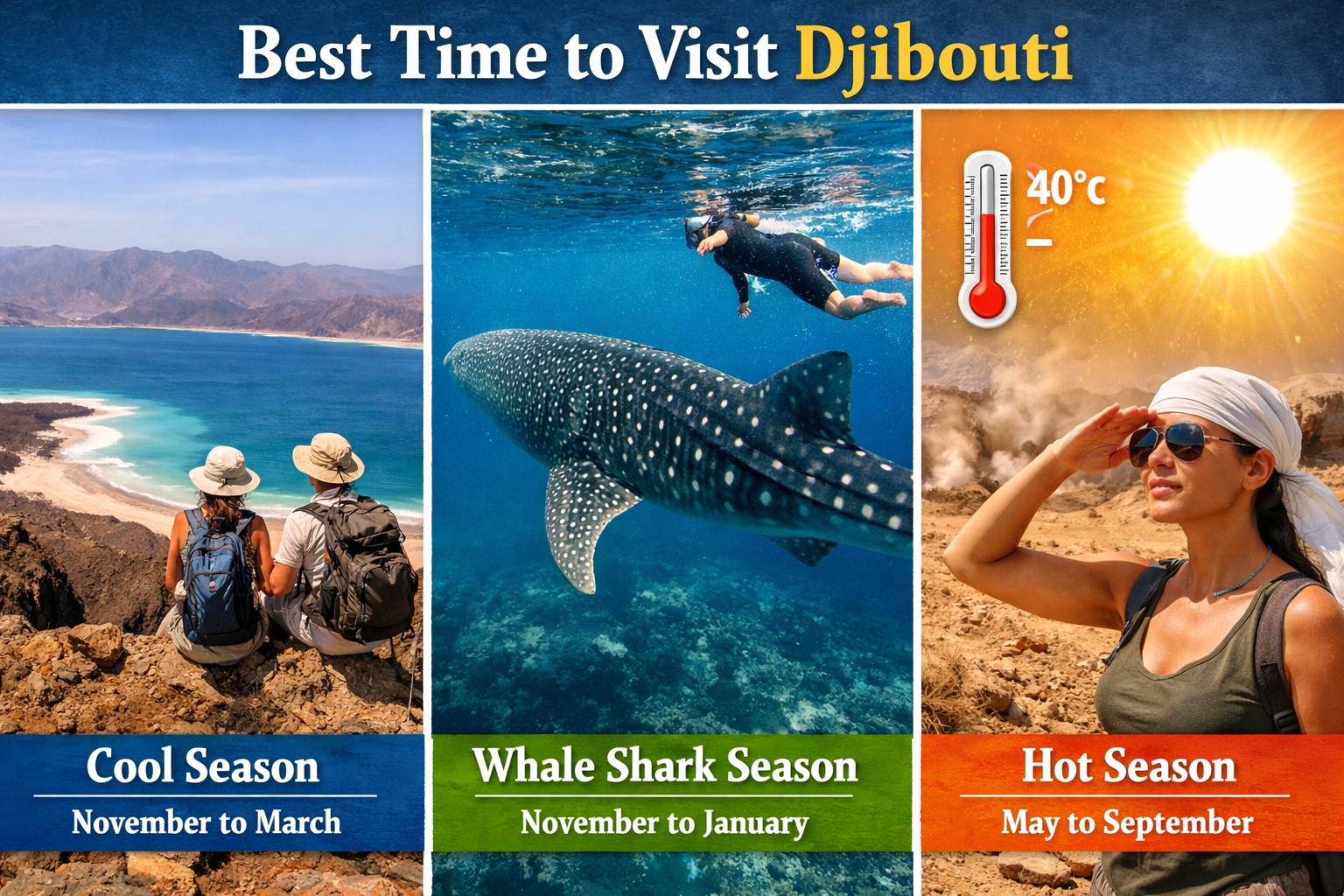
- Cool Season (November to March): This is the peak window. Temperatures are pleasant (25°C to 30°C), making it perfect for hiking and sightseeing.
- Whale Shark Season (November to January): If you want to swim with these gentle giants in the Gulf of Tadjoura, this is the time to go.
- Hot Season (May to September): Temperatures can soar above 40°C. Travel is difficult during this period unless you stay near the coast.
What are the best sightseeing spots to visit in Djibouti?
Djibouti is a nation of contrasts with volcanic sweeps contrasting with the colorful coral reefs. These are the places you cannot afford to skip in case you are seeking a journey that will make you feel like you are on another planet.
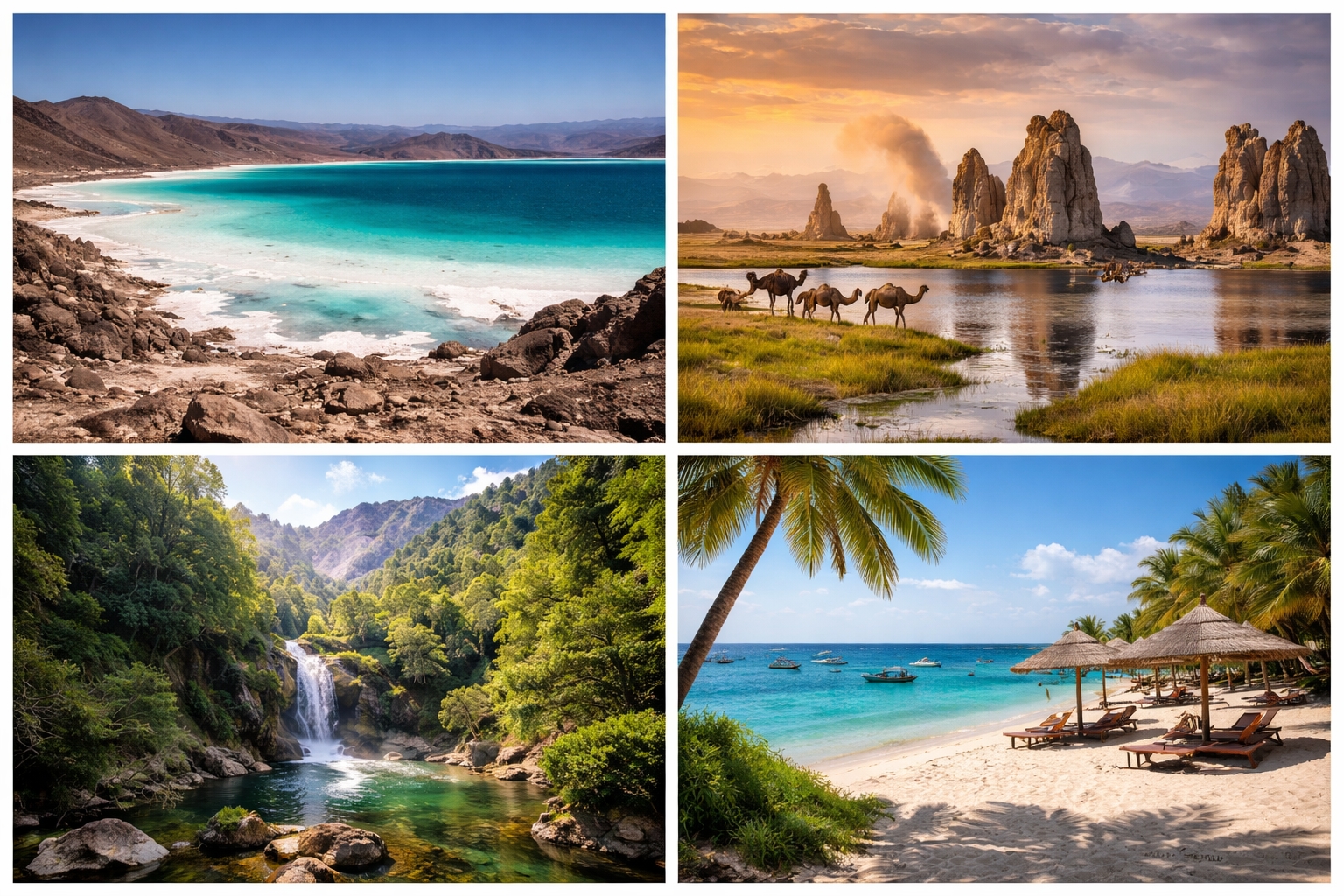
- Lake Assal: Located in a volcanic crater, this is the lowest point in Africa. The water is incredibly salty, creating brilliant white shores that contrast with deep turquoise waves.
- Lake Abbé: Known for its surreal limestone chimneys that vent steam, this area looks like a science fiction movie set and is home to nomadic Afar tribes.
- Day Forest National Park: A lush oasis in the Goda Mountains, providing a cool refuge and a chance to see rare juniper forests and unique wildlife.
- Moucha Island: A short boat ride from the capital, offering pristine white sand beaches and some of the best snorkeling and diving spots in the Red Sea.
How is the taxi and transport system in Djibouti?
Navigation through Djibouti should be done with much planning in the sense that the infrastructure is quite different in the capital and the rough interior. To the visitors, transport is a combination of city comfort and off-road fun, and the services of a private car are usually the surest means to explore the unusual nature of the country.
- Green Taxis: These are the primary mode of transport within Djibouti City. They are unmetered, so you must negotiate the fare before starting the journey. Standard rates usually start around 500 DJF for short hops, but prices can increase by 50% after dark.
- Minibuses: A cheaper alternative for locals and adventurous travelers, following set routes through the city. They typically charge a low flat fare and are a great way to see local life, though they can be crowded.
- Car Rentals: Highly recommended for visiting the salt lakes or the interior. A 4x4 vehicle is essential for off-road terrain. Most travelers find it beneficial to hire a car that includes a professional driver who knows the local routes and conditions.
- Ferries: Daily ferry services operate from Djibouti City to Tadjoura and Obock, offering a scenic and affordable way to reach the northern coast and its diving spots.
Conclusion
The eVisa system has been simplified so that traveling between the ASEAN region and Djibouti is easy. You can have your entry permit within the shortest time of 48 hours by ensuring that you qualify based on the required requirements to be met which include; 6 months valid passport, and known travel itinerary. The eVisa is your most effective access opening whether you are going there on a quick transit or you have 90 days to explore the Afar Triangle and see the best that this unique country has to offer.
Comments