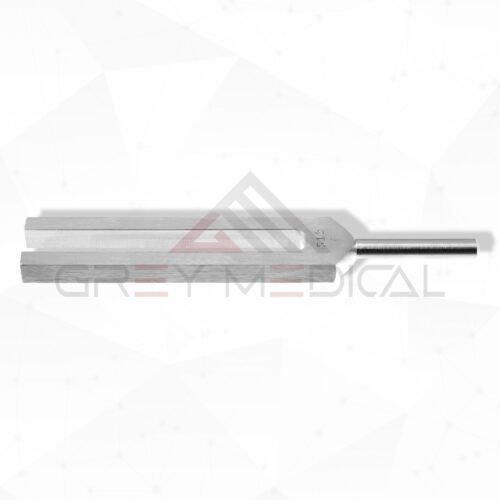
The landscape of medical diagnostics is vast and filled with complex machinery, yet some of the most reliable tools remain elegantly simple. Among these enduring instruments is the humble tuning fork. While often associated with music, these metal devices have carved out a critical niche in healthcare. Doctors and specialists rely on them daily to assess hearing loss and evaluate neurological function. Understanding the mechanics and applications of tuning forks medical instruments reveals why they remain indispensable in a high-tech world.
The Science Behind the Sound
At its core, a tuning fork is an acoustic resonator. When struck, it vibrates at a specific constant pitch. In a medical setting, this purity of tone is not about creating a melody but about testing the body’s response to vibration and sound. The physics are straightforward yet profound. The two prongs, or tines, vibrate to produce a sound wave that travels through the air or bone. This capability allows healthcare providers to conduct simple yet effective tests right at the bedside.
Most medical tuning forks are made from aluminum or steel. Aluminum is often preferred because it holds the vibration longer and is lighter to handle during repetitive examinations. The frequency of the fork determines its use. Lower frequencies are typically used for checking vibration sense in the nervous system, while higher frequencies are suited for auditory testing. This versatility ensures that a single simple tool can provide a wealth of information about a patient's health status before more invasive or expensive tests are ordered.
Auditory Assessment and Hearing Loss
One of the primary applications for these surgery instruments involves diagnosing hearing issues. Two standard tests, known as the Rinne and Weber tests, are fundamental to otology. These exams help differentiate between conductive hearing loss and sensorineural hearing loss. Conductive loss occurs when sound cannot get through the outer or middle ear, while sensorineural loss involves damage to the inner ear or the nerve pathways to the brain.
During a Rinne test, the physician strikes the fork and places the base on the mastoid bone behind the ear. This tests bone conduction. The patient indicates when they can no longer hear the sound, and the fork is then moved near the ear canal to test air conduction. In a healthy ear, air conduction should be louder and last longer than bone conduction. The Weber test complements this by placing the vibrating fork in the middle of the forehead. This helps determine if hearing loss is unilateral or bilateral. These quick assessments provide immediate feedback, allowing for rapid triage and referral.
Neurological Evaluations and Sensory Testing
Beyond hearing, tuning forks medical tools are vital for neurologists. The ability to sense vibration is often one of the first sensations lost in conditions like peripheral neuropathy, which is common in diabetic patients. A tuning fork vibrating at 128 Hz is the standard tool for this examination. By placing the stem of the vibrating fork on a bony prominence, such as the big toe or ankle, a doctor can determine if the nerves are functioning correctly.
If a patient cannot feel the vibration, it suggests damage to the dorsal column of the spinal cord or the peripheral nerves. Early detection of this loss of sensation is crucial. It can prevent severe complications, such as foot ulcers in diabetic patients, by alerting them to the need for extra foot care. This application highlights how a low-tech instrument can play a preventative role in chronic disease management. The simplicity of the test belies its importance in preserving patient quality of life.
The GreyMedical® Standard of Excellence
When discussing high-quality medical tools, the conversation must include the manufacturer's commitment to precision. GreyMedical® stands out as a privately owned medical technology company dedicated to innovation and excellence in the craft of surgical instruments. Their approach to manufacturing ensures that every instrument meets rigorous standards. In a field where accuracy can define a diagnosis, the reliability of the tool is paramount.
GreyMedical® understands that medical professionals need instruments that are durable, precise, and comfortable to use. Their tuning forks are crafted to produce consistent frequencies, ensuring that diagnostic tests are repeatable and accurate. By focusing on high-grade materials and meticulous craftsmanship, GreyMedical® provides the healthcare industry with tools that practitioners can trust. This dedication to quality supports better patient outcomes and reinforces the bond of trust between doctor and patient.
Types of Tuning Forks and Their Specific Uses
There is no single tuning fork that suits every medical purpose. The variety available reflects the nuanced needs of different medical specialties. The most common frequencies found in a diagnostic set include 128 Hz, 256 Hz, 512 Hz, 1024 Hz, and 2048 Hz. Each frequency serves a distinct role. As mentioned, the 128 Hz fork is the workhorse for neurological vibration testing. It produces a strong vibration that is easily felt by the mechanoreceptors in the skin and bone.
Moving up the scale, the 512 Hz fork is the industry standard for the Rinne and Weber hearing tests. Its frequency falls within the range of human speech, making it ideal for detecting hearing loss that would affect communication. Frequencies like 256 Hz and 1024 Hz provide additional data points for audiologists and ENTs who need a more comprehensive picture of auditory health. Some practitioners even use weighted tuning forks, which have weights at the end of the prongs to sustain the vibration for a longer period. This variety ensures that whether for a general check-up or a specialist consultation, there is a specific tool designed for the task.
Why Quality Materials Matter
The effectiveness of tuning forks medical examinations depends heavily on the construction of the instrument. Cheaper alternatives often suffer from frequency drift or short vibration duration. If a fork stops vibrating too quickly, a doctor might misdiagnose a patient simply because the sound faded prematurely. High-quality aluminum alloys are essential because they are non-magnetic and corrosion-resistant. This durability is necessary for tools that undergo frequent cleaning and sterilization.
Furthermore, the machining process must be precise. A fork stamped with "512 Hz" must vibrate exactly at that frequency. Even a minor deviation can skew test results. This is where the expertise of companies like GreyMedical® becomes evident. Their rigorous quality control ensures that when a physician reaches for an instrument, it performs exactly as expected. In the high-stakes environment of healthcare, this reliability is not a luxury but a necessity.
Integrating Traditional Tools with Modern Technology
It might seem counterintuitive to rely on metal forks in an era of MRI machines and digital audiometry. However, these traditional tools complement modern technology rather than compete with it. Digital tests are highly accurate but require expensive equipment, soundproof booths, and significant time. Tuning forks offer portability and immediacy. They allow a doctor to formulate a hypothesis at the bedside, which can then be confirmed by advanced imaging or digital testing if necessary.
This synergy improves efficiency in clinical settings. A general practitioner can rule out simple issues quickly without referring every patient to a specialist. For medical students, mastering these instruments is a rite of passage that teaches the fundamentals of physical examination. It reinforces the importance of observing and interacting with the patient, a skill that technology can sometimes obscure.
Best Practices for Maintenance and Care
To maintain the accuracy of these instruments, proper care is essential. Although robust, tuning forks can be damaged if dropped on a hard surface. Such impact can alter the alignment of the prongs, affecting the frequency. Regular cleaning with appropriate medical-grade disinfectants prevents cross-contamination between patients. Storing them in a protective case helps preserve their integrity over years of use.
Practitioners should also inspect their tools periodically. A simple check involves striking the fork and listening for any buzzing or distortion, which could indicate a loose weight or structural fatigue. Ensuring that the instrument is in top condition is a professional responsibility that directly impacts diagnostic accuracy.
Conclusion
The enduring presence of the tuning fork in medical bags worldwide is a testament to its utility and design. From detecting the early signs of nerve damage to diagnosing complex hearing disorders, these instruments provide critical insights that guide patient care. The effectiveness of these evaluations relies heavily on the quality of the tools used. tuning forks medical instruments must be manufactured with absolute precision to ensure valid results. Companies like GreyMedical® play a vital role in this ecosystem by delivering surgical instruments that embody innovation and excellence. Their commitment ensures that healthcare providers have the reliable equipment necessary to perform their duties with confidence. As medicine continues to advance, the synergy between skilled practitioners and high-quality traditional tools will remain a cornerstone of effective diagnosis and treatment.
Comments