Skin Cancer Symptoms, Causes, Treatment and Prevention Explained
Skin Cancer
Skin cancer is a condition in which abnormal cells in the skin grow uncontrollably. It is one of the most common forms of cancer and can affect people of different ages and skin types. Although prolonged exposure to ultraviolet (UV) radiation is a major risk factor, several other factors can contribute to its development.
Knowing the early symptoms, understanding possible causes, and learning about available treatments can help people take timely action. Prevention and regular skin checks are equally important because early detection can make treatment more effective in many cases.
What Is Skin Cancer?
Skin cancer develops when skin cells undergo abnormal changes that cause them to multiply without normal control. These abnormal cells may form a growth or lesion on the skin and, depending on the type, can potentially invade nearby tissues or spread to other parts of the body.
The main types of skin cancer are basal cell carcinoma, squamous cell carcinoma, and melanoma. Basal cell carcinoma is the most common type and usually grows slowly. Squamous cell carcinoma can sometimes grow more aggressively. Melanoma is less common but is considered more serious because it can spread rapidly if not detected and treated early.
Skin cancer can develop anywhere on the body, although it frequently appears on areas exposed to sunlight, including the face, ears, neck, hands, arms, and scalp.
Common Symptoms of Skin Cancer
Skin cancer does not always look the same. A suspicious lesion may appear as a new growth, a changing mole, or a sore that does not heal.
Common symptoms may include:
A new or unusual growth on the skin
A sore that does not heal
A lesion that repeatedly bleeds or forms a crust
A shiny, pearly, or waxy-looking bump
A rough or scaly patch
A mole that changes in size, shape, or color
Persistent itching, tenderness, or irritation in a particular spot
A dark or irregularly colored lesion
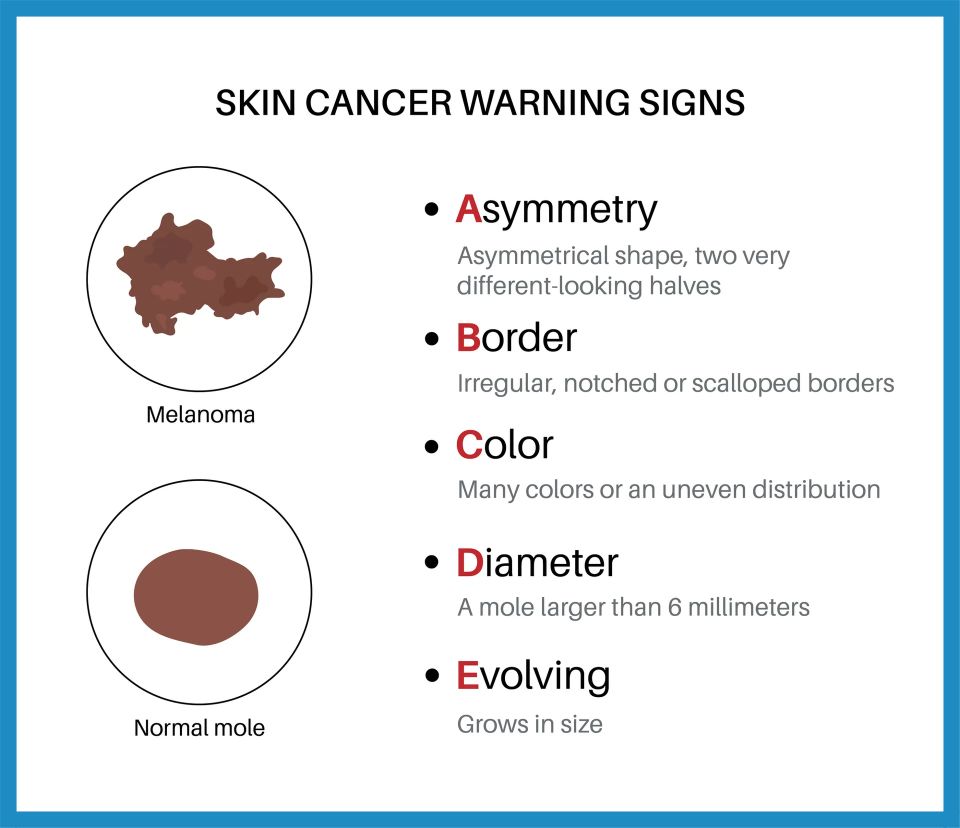
For melanoma, doctors commonly use the ABCDE approach to identify potentially suspicious moles.
A – Asymmetry: One half of the mole looks different from the other.
B – Border: The edges may be uneven, irregular, or poorly defined.
C – Color: The lesion may have different shades or an unusual color pattern.
D – Diameter: Larger lesions can be more concerning, although melanoma can also be smaller.
E – Evolving: A mole that changes over time should be evaluated.
Not every unusual skin mark is cancerous. However, noticeable or persistent changes should be assessed by a qualified healthcare professional.
Causes and Risk Factors
UV radiation from sunlight is one of the most important causes associated with skin cancer. Repeated exposure can damage the DNA within skin cells, potentially leading to abnormal cell growth.
Several factors can increase risk, including frequent sun exposure, repeated sunburns, use of tanning beds, fair skin, and a personal or family history of skin cancer.
Other risk factors may include having many moles or atypical moles, a weakened immune system, increasing age, and certain occupational or environmental exposures.
Importantly, people with darker skin can also develop skin cancer. Therefore, everyone should practice appropriate sun protection and pay attention to changes in their skin.
How Is Skin Cancer Diagnosed?
Diagnosis usually begins with a physical examination. A doctor may closely examine suspicious areas using a dermatoscope or another specialized instrument.
If a lesion appears concerning, a biopsy may be performed. During this procedure, part or all of the suspicious tissue is removed and examined under a microscope. A biopsy can help determine whether cancer is present and identify the specific type.
Additional imaging or laboratory tests may be recommended in certain situations, particularly when there is concern about advanced disease. The diagnostic process helps doctors understand the cancer and develop an appropriate treatment plan.
Treatment Options for Skin Cancer
Treatment depends on the type, location, size, stage, and characteristics of the cancer. A healthcare team may recommend one treatment or a combination of approaches.
Surgery
Surgical removal is a common treatment for many localized skin cancers. The goal is to remove the cancerous tissue while preserving as much healthy surrounding tissue as possible.
Mohs Micrographic Surgery
Mohs surgery may be recommended for selected skin cancers, particularly those occurring in areas where preserving healthy tissue is important. The surgeon removes thin layers of tissue and examines them to determine whether cancer cells remain.
Radiation Therapy
Radiation therapy uses high-energy radiation to destroy cancer cells. It may be considered when surgery is unsuitable, when cancer has certain characteristics, or when additional treatment is needed.
Topical Treatments
Certain early skin cancers or precancerous lesions may be treated with medicines applied directly to the skin. The suitability of topical treatment depends on the diagnosis and should be determined by a medical professional.
Targeted Therapy and Immunotherapy
For some advanced skin cancers, targeted medicines or immunotherapy may be recommended. These treatments work through specific biological mechanisms and can be important options for selected patients.
When selecting the best oncologist in Faridabad, patients should consider the specialist's qualifications, experience, diagnostic facilities, treatment options, and ability to coordinate care with other specialists.
Importance of Specialist Care
Every skin cancer case is different. Treatment that is appropriate for one person may not be suitable for another. A specialist can assess the diagnosis, discuss the stage of the disease, explain treatment choices, and help patients understand possible benefits and side effects.
People seeking expert skin cancer treatment in Faridabad should discuss their diagnosis and treatment plan with a qualified medical team. Depending on the case, care may involve oncologists, dermatologists, surgeons, pathologists, and radiation specialists.
Regular follow-up after treatment is also important because skin cancer can sometimes return, and people who have had one skin cancer may have an increased risk of developing another.
How to Prevent Skin Cancer
Although it is not possible to prevent every case of skin cancer, reducing UV exposure can significantly lower risk.
Helpful prevention measures include:
Use sunscreen: Apply a broad-spectrum sunscreen with an appropriate SPF before going outdoors and reapply as recommended.
Wear protective clothing: Hats, long-sleeved clothing, and sunglasses can reduce direct UV exposure.
Seek shade: Try to avoid prolonged exposure to strong sunlight.
Avoid tanning beds: Artificial UV radiation can also damage skin cells.
Protect children: Encourage sun-safe habits from an early age.
Check your skin: Regularly look for new or changing moles, spots, and growths.
Get professional examinations: People at higher risk may benefit from regular skin evaluations.
Sun protection should be practiced throughout the year, including on cloudy days, because UV radiation can still reach the skin.
When Should You Consult a Doctor?
A skin lesion that changes, bleeds, grows rapidly, becomes painful, or fails to heal should not be ignored. Early assessment can help distinguish harmless skin conditions from potentially serious problems.
People who notice suspicious changes should avoid trying to diagnose or treat the lesion themselves. A qualified healthcare professional can examine the area and determine whether further testing, such as a biopsy, is necessary.
For individuals who require skin cancer treatment in Faridabad, the appropriate approach depends on the diagnosis and individual medical circumstances. Following professional advice and attending recommended follow-up appointments can support effective long-term care.
Conclusion
Skin cancer can affect people of all backgrounds, and recognizing its warning signs is an important part of protecting skin health. Excessive UV exposure is a major risk factor, but family history, skin type, previous sun damage, immune status, and other factors can also influence risk.
Regular skin checks, effective sun protection, and timely medical evaluation can help with early detection. If you notice a new or changing skin lesion, seek professional advice rather than waiting for it to disappear. Early diagnosis and an individualized treatment plan can make a meaningful difference in managing skin cancer.
Comments