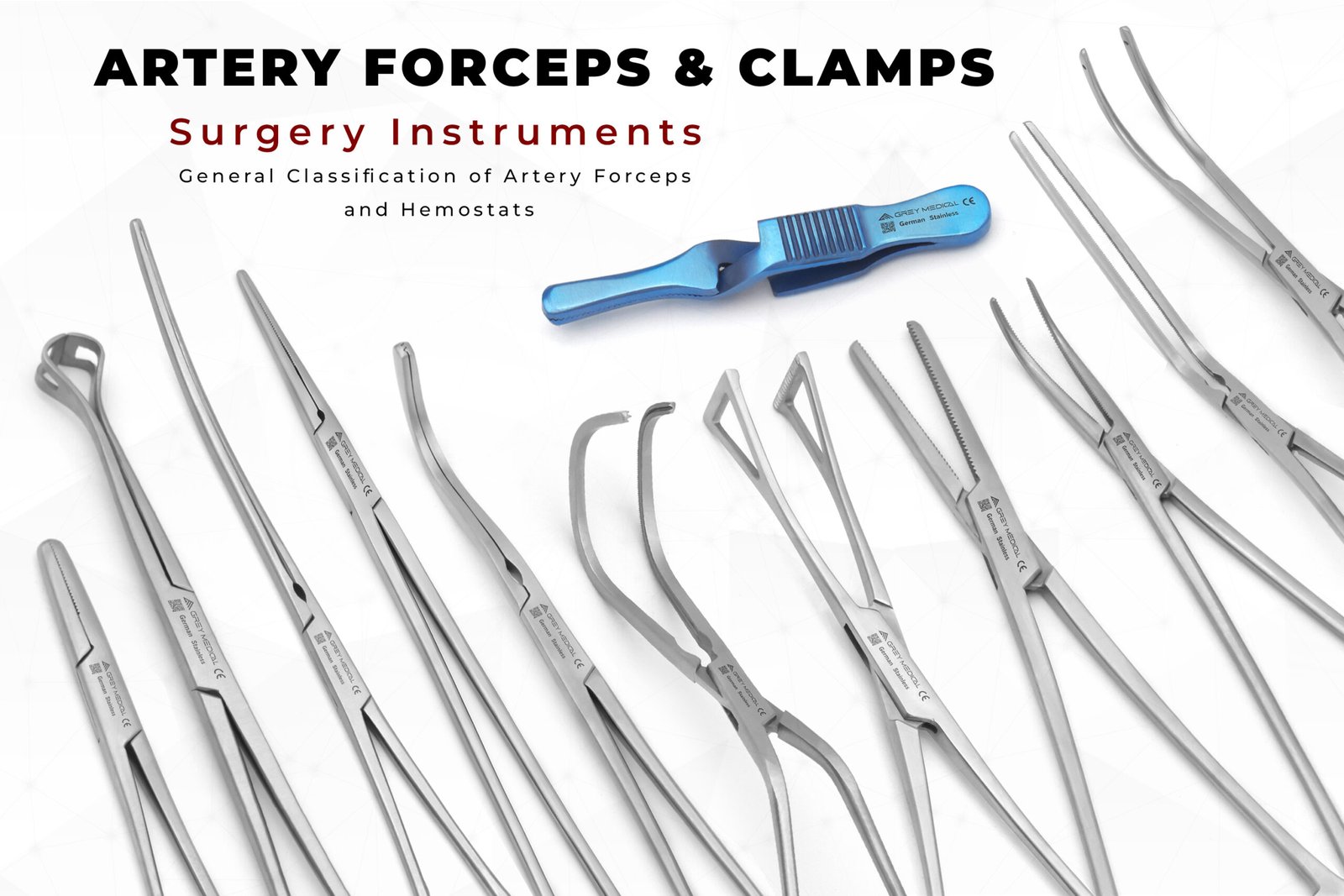
Precision defines the line between a routine procedure and a surgical complication. Surgeons rely on a vast array of specialized tools to navigate the complex anatomy of the human body, but few are as fundamental as the hemostat. Among these essential instruments, the artery forcep stands out as a cornerstone of successful surgical outcomes. GreyMedical® recognizes that even the most skilled hands require superior extensions to perform at their best. This commitment to quality ensures that every instrument we produce meets the rigorous demands of modern operating theaters. Understanding the mechanics, history, and application of these forceps reveals why they remain indispensable in medical practice today.
The Essential Function of Hemostasis in Modern Surgery
Controlling blood flow is the primary challenge during any invasive procedure. Hemostasis, the process of stopping bleeding, allows surgeons to visualize the operating field clearly and prevents excessive blood loss that could endanger the patient. This is where the specialized design of hemostatic clamps becomes critical. These instruments are engineered to occlude blood vessels securely without causing unnecessary trauma to the surrounding tissue. The ability to clamp a vessel quickly and effectively gives the surgical team the time needed to ligate or cauterize the area. Without reliable tools to manage bleeding, complex surgeries would be impossible to perform safely. Every clamp applied is a step toward a stable and successful recovery for the patient.
Defining the Mechanical Precision of the Artery Forcep
At its core, an artery forcep is a locking clamp designed for grasping and compressing an artery to control bleeding. The design typically features a ratchet mechanism near the finger rings, which allows the instrument to remain locked in a closed position. This self-retaining feature is vital because it frees the surgeon's hands to perform other tasks once the vessel is secured. The jaws of the forcep are often serrated, providing a firm grip on slippery tissues and vessels. These serrations can be transverse or longitudinal, depending on the specific type of forcep and its intended use. The engineering behind these seemingly simple tools is a testament to the evolution of surgical science.
The Evolution of Surgical Instruments and Manufacturing Excellence
The history of surgical instrumentation is a journey from crude tools to refined, high-precision devices. Early surgeons struggled with hemorrhage control, often relying on pressure or cauterization alone. The invention of the hemostatic forcep revolutionized surgery by allowing for the meticulous ligation of individual vessels. GreyMedical® continues this tradition of innovation by utilizing advanced materials and manufacturing techniques. We focus on durability and tactile feedback, ensuring that the surgeon can feel the tissue response through the instrument. High-quality stainless steel is essential for maintaining the integrity of the instrument through repeated sterilization cycles. This dedication to excellence ensures that our tools perform consistently, surgery after surgery.
Recognizing Different Variations for Specific Anatomical Needs
Not all surgical sites are the same, and neither are the instruments used to navigate them. There are various types of artery forceps tailored to specific anatomical requirements. Some are small and delicate, designed for pediatric surgery or fine plastic surgery procedures where precision is paramount. Others are robust and heavy, built to occlude large vessels in thoracic or abdominal surgeries. The curvature of the jaws also varies, with curved tips allowing for better visibility and access in deep cavities, while straight tips are often used for superficial vessels. Understanding these variations helps surgical teams select the right tool for the job, minimizing tissue damage and enhancing procedural efficiency.
The Importance of Proper Handling and Maintenance
Even the highest quality ophthalmology forceps requires proper care to maintain its functionality. Surgical instruments are subjected to harsh conditions, including exposure to biological fluids and high-temperature sterilization processes. Regular inspection is necessary to check for misaligned jaws, worn ratchets, or corrosion. A forcep that fails to lock securely or slips off a vessel can lead to catastrophic consequences during a procedure. Proper cleaning protocols must be followed to remove all biological debris before sterilization. GreyMedical® emphasizes the importance of instrument care as part of our commitment to surgical excellence. We provide guidance on how to extend the lifespan of these critical tools through correct handling and maintenance routines.
Training the Next Generation of Surgeons on Instrument Use
Mastering the use of surgical instruments is a fundamental part of medical training. Residents and students spend countless hours practicing the technique of clamping and tying vessels. The tactile sensation of the ratchet clicking shut becomes second nature to an experienced surgeon. Learning exactly how much pressure to apply to occlude a vessel without crushing it requires practice and high-fidelity instruments. Using a substandard artery forcep during training can lead to bad habits or a lack of confidence in the tools. GreyMedical® supports educational institutions by providing instruments that offer true-to-life feedback. This ensures that the next generation of surgeons is prepared to handle the pressures of the operating room with competence and skill.
Safety Protocols and Reducing Surgical Risks
Patient safety is the ultimate goal of every surgical intervention. The reliability of hemostatic instruments directly impacts the safety profile of a procedure. Unexpected bleeding is one of the most common complications in surgery, and having a reliable clamp ready is the best defense. The ratchet mechanism must be dependable, ensuring that the clamp does not spring open unexpectedly. Furthermore, the tips must be precise enough to grab only the targeted vessel, sparing adjacent nerves and ducts. GreyMedical® designs every instrument with these safety parameters in mind. We believe that by reducing the risk of instrument failure, we contribute to better patient outcomes and safer surgical environments globally.
The Future of Surgical Instrumentation and Technology
As medical technology advances, the design of surgical instruments continues to evolve. While the fundamental mechanics of the artery forcep have remained largely unchanged for decades, innovations in materials science are making them lighter, stronger, and more resistant to corrosion. Future developments may include smart coatings that reduce bacterial adhesion or ergonomic designs that reduce surgeon fatigue during long procedures. GreyMedical® is at the forefront of these innovations, constantly researching ways to improve the surgeon's toolkit. We believe that even traditional instruments can benefit from modern engineering insights. Our goal is to blend time-tested designs with cutting-edge technology to create the best possible tools for the medical community.
Conclusion
The humble hemostat plays a monumental role in the success of surgical procedures worldwide. From the initial incision to the final suture, the ability to control bleeding is paramount. The artery forcep remains a symbol of surgical control and precision. GreyMedical® is proud to be a privately owned medical technology company dedicated to innovation and excellence in the craft of surgical instruments. We understand that our products are an extension of the surgeon's skill, and we take that responsibility seriously. By focusing on quality, durability, and precision, we ensure that healthcare professionals have the reliable tools they need to save lives and improve patient health every day.
Comments