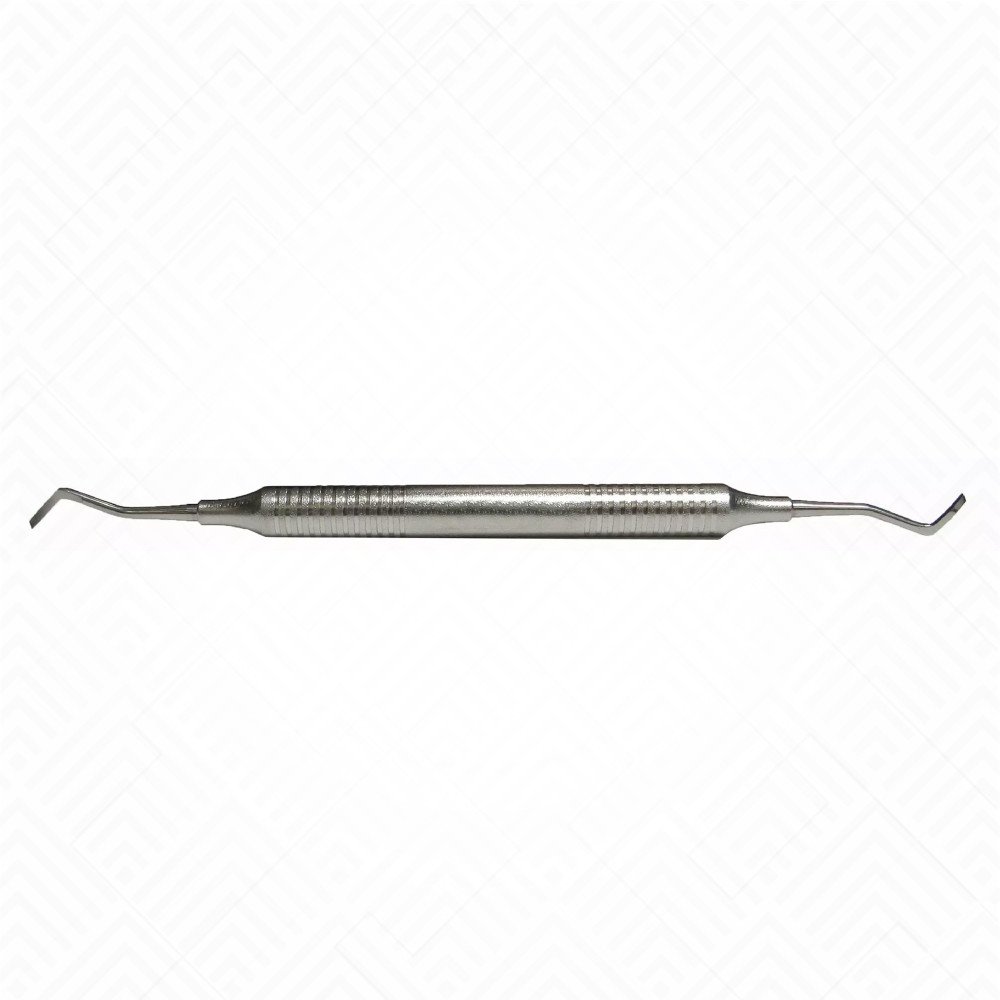
Precision defines the difference between a successful dental restoration and one that fails prematurely. Every step in a cavity preparation or crown placement relies on the accuracy of the tools in a dentist's hand. While high-speed handpieces often get the most attention, manual hand instruments play a quiet but critical role in finalizing the shape and quality of the preparation. Among these essential tools, the gingival margin trimmer stands out as a vital instrument for refining cavity walls and ensuring the longevity of dental work. This gingival margin trimmers specialized chisel allows practitioners to achieve the smooth, angled margins necessary for superior bonding and patient comfort.
Understanding the Design of Gingival Margin Trimmers
A dental professional can easily distinguish this instrument from a standard hatchet or chisel by looking closely at the cutting edge. Unlike other hand instruments that have a blade perpendicular to the handle, gingival margin trimmers feature a curved blade with an angled cutting edge. This specific angulation is what makes them unique and indispensable. The blade is typically curved to the left or right, and the cutting edge is slanted rather than straight. This design allows the dentist to access the difficult-to-reach gingival floor of a cavity preparation, specifically in Class II restorations where the decay extends between teeth. The instrument usually comes in pairs or a set of four, designed to address both the mesial and distal surfaces of the teeth. The numbers stamped on the handle—following G.V. Black’s instrument formula—tell the dentist everything they need to know about the angle and size of the blade. For instance, a trimmer designed for the distal surface will have a cutting edge angle greater than 90 degrees relative to the blade, while a mesial trimmer will have an angle of 85 degrees or less. This subtle geometry allows the operator to employ a lateral scraping motion that planes the enamel rods perfectly. Without this specialized design, achieving a smooth, bevelled margin at the gum line would be nearly impossible with rotary instruments alone.
The Primary Function in Cavity Preparation
The main purpose of this instrument is to create a proper bevel on the gingival enamel margins of proximo-occlusal preparations. When a dentist drills a cavity, the high-speed burr can leave rough, unsupported enamel rods at the base of the preparation near the gums. If these fragile rods are left in place, they are prone to fracturing under the pressure of chewing or the contraction of restorative materials. Such fractures create clamp micro gaps between the tooth and the filling, leading to leakage, sensitivity, and recurrent decay. This is where the manual precision of the trimmer becomes crucial. By firmly placing the cutting edge against the gingival floor and applying controlled pressure, the dentist shaves away unsupported enamel. This action creates a smooth, angled surface that is ideal for bonding. The process removes loose prisms of enamel and ensures that the restorative material, whether it is amalgam or composite resin, seals tightly against the tooth structure. While modern dentistry relies heavily on technology, the tactile feedback provided by manual instrumentation ensures that the margins are sound and solid. No laser or burr can replicate the distinct feeling of a sharp blade smoothing rough enamel into a pristine finish.
Enhancing Restoration Longevity and Success
The long-term success of a filling or crown depends heavily on the integrity of the marginal seal. Bacteria are relentless and will exploit any gap or roughness at the restoration interface. By using gingival margin trimmers to refine the preparation, dentists significantly reduce the risk of secondary caries. The smooth bevel created by the instrument increases the surface area for bonding and allows for a more gradual transition between the restoration and the natural tooth. This is particularly important for gold inlays and onlays, where the metal must be burnished against the tooth to create a seamless seal. Furthermore, these instruments help protect the adjacent tooth from accidental damage. When preparing a cavity on the side of a tooth, a rotating burr can easily slip and nick the neighboring tooth surface. Using a hand instrument to finish the deep gingival margins allows for a safer, more controlled approach in these tight interproximal spaces. The curvature of the blade helps the dentist reach around the tooth structure without traumatizing the surrounding gum tissue. This attention to detail during the preparation phase pays dividends years later, as the patient enjoys a restoration that remains secure, comfortable, and free of decay.
Versatility Beyond Basic Cavity Prep
While their name suggests a single use, these instruments are versatile tools in a skilled clinician's kit. Beyond just bevelling gingival margins, they are excellent for sharpening line angles within the cavity preparation. Sharp, well-defined internal angles help retain the filling material and distribute biting forces more evenly across the tooth. A dentist might also use them to remove weak overhangs of old restorative material or to scrape away stubborn calculus deposits that are located just below the gum line during a preparation. This versatility highlights why high-quality steel construction is non-negotiable for these tools. The blade must remain razor-sharp to cut enamel effectively without crushing it. A dull instrument requires excessive force, which can lead to slippage and injury to the patient's soft tissues. Therefore, investing in premium instruments that retain their edge through repeated sterilization cycles is a priority for any serious dental practice. The tactile sensitivity offered by a high-grade steel instrument allows the dentist to feel exactly where the enamel is rough or unsupported, guiding their hand to create the perfect foundation for the final restoration.
Commitment to Quality Surgical Solutions
Every dental procedure is an opportunity to improve a patient's quality of life, and that improvement starts with the tools in the surgeon's hand. New Med Instruments understands that the gap between a good procedure and a great one often lies in the precision of the equipment used. We seek to provide quality surgical instruments and superior service to surgeons, students, and healthcare professionals all over the world who value perfect and precise results for their patients. Whether a surgeon is just starting his practice or endeavoring to improve his techniques and add new procedures to an established repertoire, our products will meet his specific surgical needs. By choosing reliable tools like our gingival margin trimmers, dental professionals ensure they are delivering the highest standard of care with every movement of their hand.
Comments