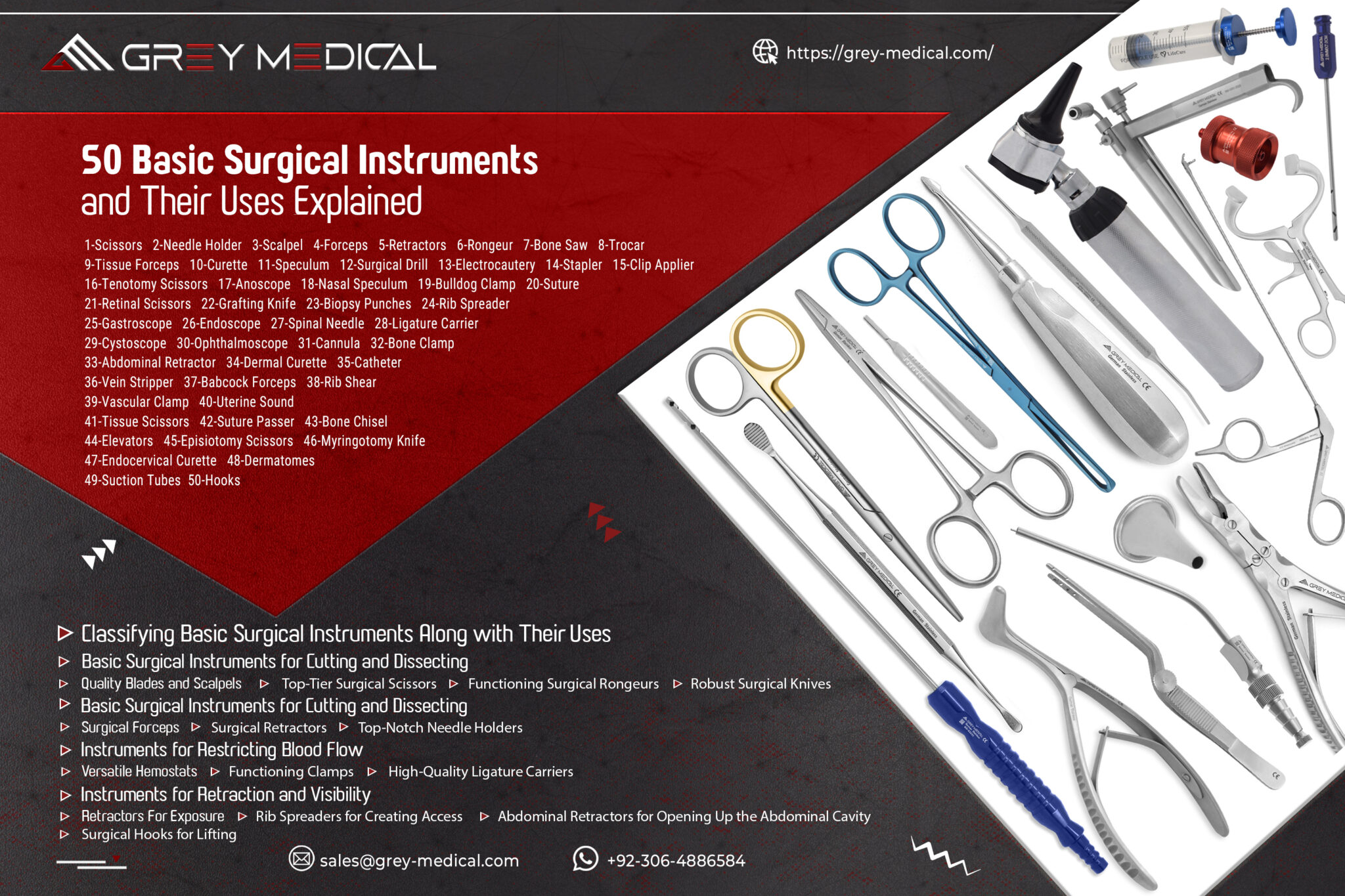
Have you ever wondered what actually happens behind the closed doors of an operating room? Beyond the bright lights and the intense focus, a surgeon's success relies heavily on a highly specialized arsenal of instruments. These aren't just ordinary tools for ophthalmic ; they are masterfully crafted extensions of a surgeon's hands, designed for absolute precision, durability, and safety.
While television dramas often focus on the high-stakes tension, the real magic lies in the seamless coordination between the surgical team and their equipment. From the moment the first incision is made to the final stitch, every instrument has a distinct, irreplaceable role. Let's break down the essential categories of tools that surgeons use every single day to save lives.
Cutting and Dissecting Tools
The first step in almost any surgical procedure involves creating access to the affected area. This requires tools that can cleanly slice through skin, tissue, and sometimes even bone, minimizing damage to surrounding structures.
Scalpels: The quintessential surgical tool. Modern scalpels often consist of a reusable handle and disposable, single-use blades that come in various shapes and sizes depending on the type of cut needed.
Surgical Scissors: These are not your average household scissors. They come in variations like Mayo scissors (for cutting heavy tissues) and Metzenbaum scissors (for delicate dissecting). They can be straight, curved, blunt, or sharp.
Bone Cutters and Saws: Used primarily in orthopedic and neurological surgeries, these heavy-duty instruments are designed to cleanly cut or trim bone tissue.
Grasping and Holding Instruments
Once an incision is made, surgeons need to hold tissue out of the way, stabilize organs, or grasp small objects like needles and sutures without causing unnecessary trauma to the body.
Forceps: Think of these as highly specialized tweezers. Tweezers-style forceps (tissue forceps) help pick up skin or tissue, while locking forceps (hemostats) are used to clamp blood vessels to stop bleeding.
Tissue Graspers: These specialized clamps securely hold specific organs or slippery tissues in place during a procedure.
Needle Holders: Also known as needle drivers, these tools firmly grip suturing needles so the surgeon can sew wounds closed with incredible accuracy.
Clamping and Occluding Tools
Controlling bleeding is one of the most critical aspects of surgery. Clamping instruments are designed to compress blood vessels or hollow organs to prevent the flow of fluids during the operation.
Hemostatic Clamps: Commonly called hemostats, these are used to control bleeding by securely clamping blood vessels until they can be permanently sealed or tied off.
Vascular Clamps: These are uniquely engineered to temporarily block blood flow through a vessel without crushing or damaging the delicate vessel walls.
Retracting and Exposing Instruments
A surgeon cannot operate on what they cannot see. Retractors are used to hold back tissues, muscles, and organs, providing a clear, unobstructed view of the surgical site.
Handheld Retractors: These require an assistant or scrub nurse to physically hold them in place to keep the surgical window open.
Self-Retaining Retractors: These clever devices lock into position mechanically, staying open on their own so the surgical team can free up their hands for other tasks.
High-Tech and Modern Innovations
As technology has what tools do surgeons use advanced, the surgical toolkit has expanded far beyond traditional steel hand tools. Today's operating rooms feature cutting-edge tech that enhances precision and minimizes recovery time.
Electrosurgical Units (Bovie): These tools use high-frequency electrical currents to cut tissue and cauterize (seal) blood vessels simultaneously, which drastically reduces bleeding.
Laparo-Endoscopic Instruments: Used in minimally invasive "keyhole" surgeries, these long, thin rods feature tiny cameras and micro-tools at the tips, allowing surgeons to operate through minuscule incisions.
Robotic Surgical Systems: Controlled entirely by a surgeon sitting at a nearby console, these robotic arms translate hand movements into micro-movements inside the patient, offering unparalleled stability and magnification.
Comments