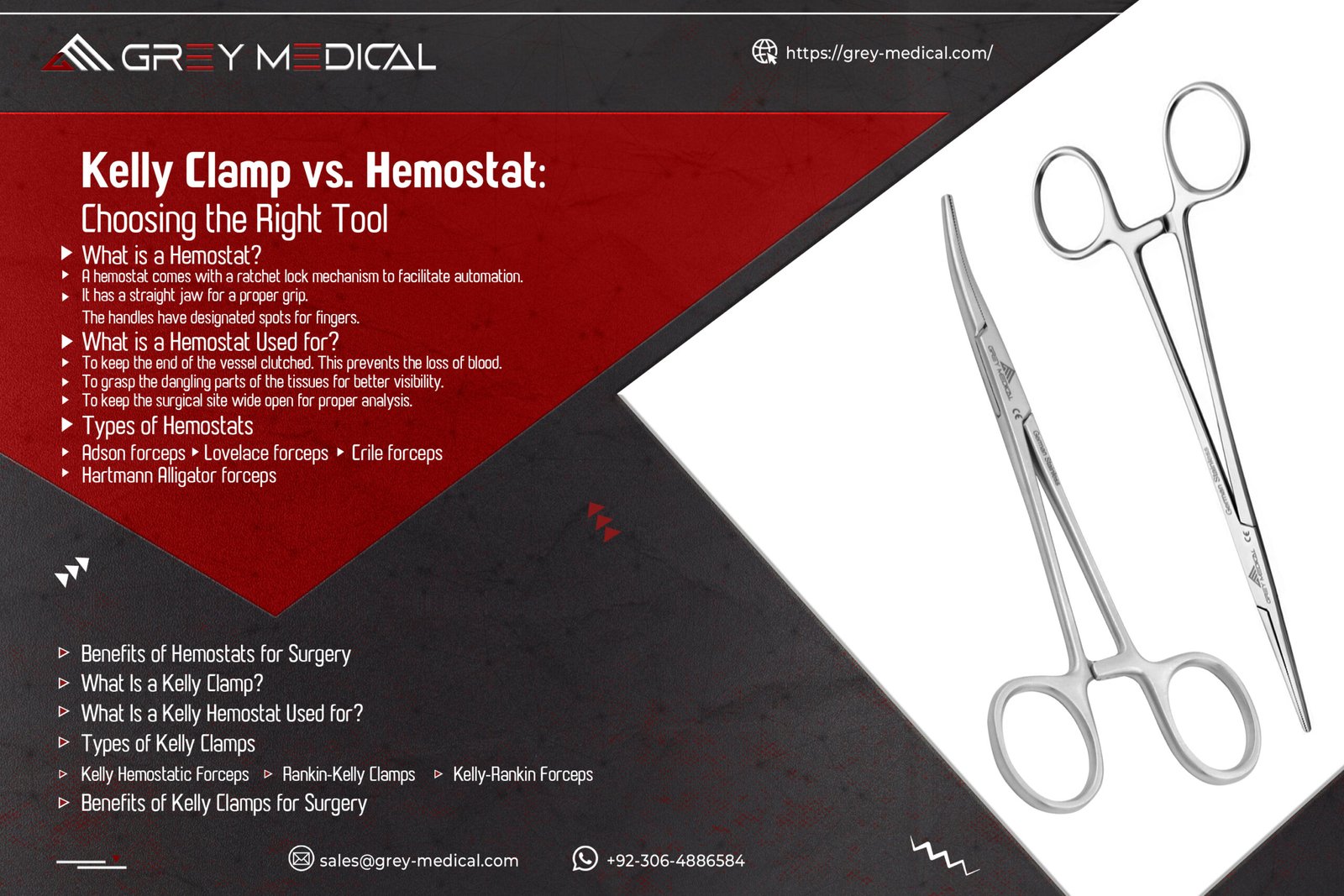
Surgical precision defines the success of countless medical procedures performed every day. Among the vast array of tools available to surgeons, certain instruments have stood the test of time due to their reliability and functional design. One such indispensable tool is the hemostat, specifically the variation known as kelly forceps. These instruments are a staple in operating rooms worldwide, prized for their versatility and effectiveness in controlling blood flow.
The Unique Design and Functionality
Surgeons rely on instruments that feel like natural extensions of their hands. The design of kelly forceps specifically caters to this need for control. Unlike other clamps, these forceps feature transverse serrations that extend only halfway down the jaws. This specific design choice is crucial. It allows the instrument to grip tissue gently but firmly without causing unnecessary trauma to the surrounding areas.
The locking mechanism, or ratchet, located near the finger loops, allows the surgeon to clamp the instrument in place and leave it there. This frees up the surgeon's hands to perform other critical tasks. Whether straight or curved, the instrument's adaptability makes it suitable for a wide range of tasks, from clamping larger blood vessels to manipulating heavy tissue.
Significance in Surgical Procedures
In the high-stakes environment of an operating theater, hemorrhage control is paramount. This is where kelly forceps truly shine. Their primary function is hemostasis—the stopping of bleeding. By clamping blood vessels before ligation or cauterization, they ensure a clear surgical field. This visibility is vital for the surgeon to operate safely and accurately.
Beyond hemostasis, these surgical forceps serve multiple purposes. General surgery, gynecology, and even veterinary medicine utilize them frequently. Their robust build allows them to grasp tissue that might be too slippery or tough for finer instruments. When a surgeon reaches for this tool, they are reaching for reliability. The instrument's ability to hold tension securely provides the surgical team with confidence during critical moments of an operation.
GreyMedical®: A Commitment to Surgical Excellence
High-quality procedures demand high-quality instruments. GreyMedical® understands this connection deeply. As a privately owned medical technology company dedicated to innovation and excellence in the craft of surgical instruments, GreyMedical® ensures that tools like these meet the rigorous standards of modern medicine. Their commitment to precision manufacturing means that surgeons can trust the equipment in their hands, knowing it has been crafted with the utmost care and attention to detail.
The Continuing Relevance in Modern Medicine
Despite the rapid advancement of robotic surgery and laser technologies, traditional manual instruments remain fundamental. The tactile feedback provided by manual tools is irreplaceable in many scenarios. Kelly forceps continue to be manufactured and improved upon, using higher-grade stainless steel and ergonomic designs to reduce hand fatigue.
Medical students learn early on that mastering the use of these forceps is a rite of passage. Understanding how to engage and disengage the ratchet smoothly, or how to position the curved tip to avoid obscuring the line of sight, are foundational skills. This enduring relevance speaks volumes about the instrument's perfect balance of form and function.
Conclusion
The success of a surgery often depends on the smallest details. While they may seem like simple clamps to the untrained eye, kelly forceps represent a critical component of surgical safety and efficiency. From their specialized half-serrated jaws to their locking mechanisms, every aspect is designed to aid the surgeon. Companies like GreyMedical® continue to support the medical community by providing these essential tools, ensuring that the tradition of surgical excellence continues for future generations.
Comments