Web App vs Mobile App Development: Which Delivers Better Business Growth?
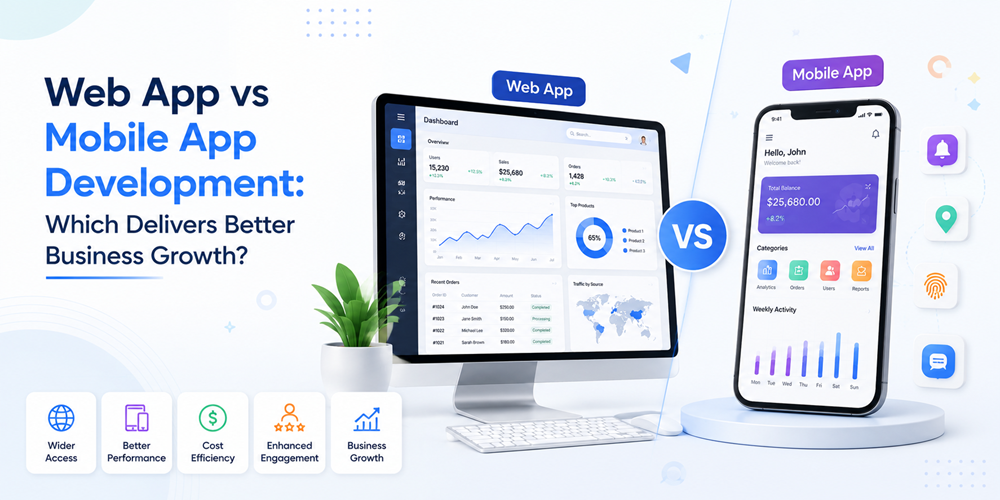
In today's digital-first business environment, companies are constantly looking for the most effective ways to reach customers, improve engagement, and generate revenue. One of the most common questions organizations face is whether to invest in a web application or a mobile application. The debate around mobile app development vs web development has become increasingly important as customer expectations continue to evolve.
Both web apps and mobile apps offer unique advantages, but choosing the right solution depends on your business goals, audience behavior, budget, and long-term growth strategy. Understanding the differences between app development vs web development can help businesses make informed technology decisions and maximize returns on their digital investments.
Understanding Web App Development
A web application is software that runs through a web browser and can be accessed from any internet-connected device. Unlike mobile applications, users do not need to download or install web apps from an app store.
Modern web applications provide responsive user experiences and can perform many of the same functions as native mobile applications. Businesses often choose web applications because they are easier to deploy, maintain, and update across multiple devices.
Common examples include customer portals, online booking platforms, eCommerce websites, and business management systems.
Understanding Mobile App Development
Mobile application development involves creating software specifically designed for smartphones and tablets. These applications can be developed for platforms such as iOS and Android and are downloaded through app stores.
Mobile apps offer direct access to device features such as cameras, GPS, push notifications, biometrics, and offline functionality. These capabilities allow businesses to create highly personalized and engaging user experiences.
From banking and healthcare to retail and entertainment, mobile applications have become a key channel for customer interaction and business growth.
Mobile App Development vs Web Development: Key Differences
Accessibility
Web applications are accessible through any browser, making them easy for users to access without installation. This lowers entry barriers and allows businesses to reach a wider audience quickly.
Mobile apps, however, require users to download and install them. While this creates an additional step, it often results in higher user engagement and retention.
User Experience
When comparing mobile app development vs web development, user experience is often the biggest differentiator.
Mobile apps provide smoother navigation, faster performance, and deeper personalization because they are built specifically for mobile devices. Web applications, while responsive, may not always deliver the same level of functionality and speed.
Performance
Mobile apps generally outperform web applications because they utilize device resources directly. This allows for faster loading times, better responsiveness, and offline access.
Web applications depend heavily on internet connectivity and browser performance, which can affect user experience in low-network environments.
Maintenance
Web applications are easier to maintain because updates are deployed centrally and become instantly available to all users.
Mobile apps require ongoing updates across different platforms and app store approvals, which can increase maintenance efforts.
Cost Comparison Between Mobile App and Web Development
One of the most important considerations for businesses is the cost comparison between mobile app and web development.
Web applications typically require lower initial development costs because a single codebase can serve multiple devices and operating systems. Maintenance costs are also generally lower due to centralized updates.
Mobile app development often requires separate development efforts for Android and iOS platforms unless cross-platform frameworks are used. Additional expenses may include app store fees, ongoing updates, testing, and platform-specific enhancements.
For startups and small businesses with limited budgets, web development may offer a more affordable entry point. However, businesses focused on long-term customer engagement may find that mobile apps deliver greater value over time.
Benefits of Mobile App Development for Businesses
The benefits of mobile app development for businesses extend far beyond accessibility.
Enhanced Customer Engagement
Push notifications enable businesses to communicate directly with users, promoting offers, updates, and personalized experiences.
Improved Brand Visibility
A mobile app places your brand directly on customers' devices, increasing visibility and strengthening brand recognition.
Better Customer Loyalty
Features such as loyalty programs, personalized recommendations, and exclusive content encourage repeat interactions and long-term customer relationships.
Access to Device Features
Mobile applications can leverage GPS, cameras, biometrics, and offline capabilities to deliver richer user experiences.
Higher Conversion Rates
Many businesses experience higher conversion rates through mobile apps because of streamlined user journeys and personalized interactions.
Web Development vs Mobile App Development ROI
Evaluating web development vs mobile app development ROI depends largely on business objectives.
Web applications often generate faster returns because of lower development costs and broader accessibility. They are ideal for businesses seeking lead generation, information delivery, and online visibility.
Mobile apps typically require larger upfront investments but can produce substantial long-term returns through increased customer engagement, retention, and recurring revenue opportunities.
For example, subscription-based services, eCommerce platforms, and customer loyalty programs often achieve stronger ROI through mobile applications due to frequent user interactions.
Businesses should assess customer behavior, revenue models, and growth goals when calculating potential returns.
Mobile App vs Website for Startup Businesses
The question of mobile app vs website for startup businesses does not have a one-size-fits-all answer.
For most startups, a responsive website or web application is often the recommended starting point. It allows businesses to validate ideas, attract customers, and establish an online presence with lower investment.
Once user demand and market fit are confirmed, businesses can expand into mobile applications to enhance customer engagement and deliver advanced functionality.
Many successful companies begin with a web platform and later introduce mobile applications as their customer base grows.
When to Choose Mobile App Development Over Web Development
Understanding when to choose mobile app development over web development can help businesses make smarter technology investments.
Mobile app development is often the better choice when:
- Customer engagement is a primary business objective.
- Frequent user interactions are expected.
- Offline functionality is required.
- Personalized experiences are critical.
- Push notifications can drive customer retention.
- Device-specific features add business value.
On the other hand, web development may be the preferred option when rapid deployment, broad accessibility, and cost efficiency are top priorities.
Conclusion
The debate over mobile app development or web development which is better ultimately depends on your business goals, audience needs, and growth strategy. Web applications offer accessibility, affordability, and faster deployment, making them an excellent starting point for many businesses. Mobile applications provide superior engagement, personalization, and long-term customer retention opportunities.
Rather than viewing the decision as an either-or choice, many growing businesses benefit from a combined approach that leverages both platforms. By aligning technology investments with business objectives, organizations can create digital experiences that drive sustainable growth and maximize ROI.
Comments